Monday, April 8, 2019

Carnival From Brazil!!

Jejak PandaHai.. Bertemu Lagi Di Website Kesayangan Anda
situs bandarq


    The Carnival of Brazil, is an annual pekan raya held 46 days before Easter. On certain days of Lent, Roman Catholics and some other Christians traditionally abstained from the consumption of meat and poultry, hence the term "carnival", from carnelevre, "to remove meat". Carnival celebrations are believed to have roots in the pagan pekan raya of Saturnalia, which, adapted to Christianity, became a farewell to bad things in a season of religious discipline to practice repentance and prepare for Christ's death and resurrection.


    Rhythm, participation, and costumes vary from one region of Brazil to another. In the southeastern cities of Rio de Janeiro and Sao Paulo, huge organized parades are led by samba schools. Those official parades are meant to be watched by the public, with mini parades ("blocos") allowing a public participation can be found in other cities. The northeastern cities of Salvador, Porto Segur and Recife have organized groups parading through streets, and the public interacts directly with them. This carnival is heavily influenced by African-Brazilian culture. Crowds follow the trio electricos floats through the city streets. Also in northeast Olinda, carnival features unique characteristics, part influenced by Venice Carnival mixed with cultural depictions of local folklore.


    Carnival is the most famous holiday in Brazil and has become an event of hug proportions. The country stops completely for almost a week and festivities are intense, day and night, mainly in coastal cities. The consumption of beer during the pekan raya accounts for 80% of annual consumption and tourism receives a 70% boost of annual visitors. The government distributes condoms and launches an awareness campaign at this time to prevent the spread of AIDS and other STD's.

History of Carnival

    The modern Brazilian Carnival originated in Rio de Janeiro in 1641, when the city's bourgeoisie imported the practice of holding balls and masquerade parties from Paris. It originally mimicked the European form of the festival, later absorbing and creolizing elements derived from Native American and African cultures.
    In the late 19th century, the cordoes (cords, laces or strings) were introduced in Rio de Janeiro. These were pageant groups that paraded through city avenues performing on instruments and dancing. Today they are known as Blocos (blocks), consisting of a group of people who dress in costumes or special t-shirts with themes and/or logos. Blocos are generally associated with particular neighborhoods. They include both a percussion or music group and an entourage of revellers.


    Block parades have become an expressive feature of Rio's Carnival. Today, they number more than 100 and the groups increase each year in size. Blocos can be formed by small or large groups of revelers with a distinct title with an often funny pun. They may also not their neighborhood or social status. Before the show, they gather in a square, then parade in sections of the city, often near the beach. Some blocos never leave one street and have a particular place, such as a bar, to attract viewers. Block parades start in January, and may last until the Sunday after Carnival.


    Samba schools are very large groups of performers, financed by respected organizations who work year round in preparation for Carnival. Samba schools perform in the Sambadrome, which runs 4 entire nights. They're part of an official competition, divided into 7 divisions, in which a single school is declared the winner, according to costume, flow, them, and grup musik music quality and performance. Some samba schools also hold street parties in their neighborhoods, through which they parade along with their followers.
    Carnival time in Rio is a very interesting, but also the most expensive time to visit Rio. Hotel rooms and lodgings can be up to 4 times more expensive than the regular rates. There are big crowds at some locations and life is far from ordinary in many parts of town.


Sambodromo

    The Carnival parades in Rio de Janeiro and Sao Paulo take place in the Sambodromo, locate close to the city center. In the city of Rio, the parades start at roughly 9-10 p.m., depending of the date and end around 5 in the morning. The Rio Metro (subway) operates 24 hours during the main parade days.
    The actual amount of spectators in the Sambodromo may be higher than the official number of seats available. Like any other event the better the seats the higher the price for them.


Music

Samba
    The Samba originated in Bahia from the African rhythms, it was brought to Rio around 1920 and is still one of the most popular styles of Brazilian music, together with Samba-pargode and Samba-reggae. From intimate samba-cancoes ( samba songs) sung in bars to explosive drum parades performed during Carnival, samba always evokes a warm and vibrant mood. Samba developed as a distinctive kind of music at the beginning of the 20th century in Rio. In the 1930's, a group of musicians led by Ismael Silva, founded in the neighborhood of Estacio de Sa, the first Samba school, Deixa Falar.
    In the following years, samba has developed into several directions, from the gentle samba-cancao to the drum orchestras which make the soundtrack of carnival parades. One of these new styles was the Bossa Nova.


    In the beginning of the 1980's, after having been sent underground due to styles like disco and Brazilian rock, the Samba reappeared in the media with a musical movement crated in the suburbs of Rio.
Axe'
    This is not exactly about style or musical movement, but rather about a useful merk name given to artists from Salvador who made music in northeastern Brazilian, Caribbean and African rhythms with a pop/rock twist, which helped them take over the Brazilian hit parades since 1992. Axe' is a ritual greeting used in Candomble' and Umbanda religions, and means "good vibration". The word music was attached to Axe', used as slang within the local music business by a journalist who intended to create a derogatory term for the pretentious dance-driven style.

Monday, April 1, 2019

Phantom Cats And Ghostly Dogs Scaring People Everywhere!!

Jejak PandaHai.. Bertemu Lagi Di Website Kesayangan Anda
situs bandarq


    During Halloween season, when images of ghosts and goblins start to inhabit our consciousness, it is important to remember that people are not the only ones who have been known to return to our world of perception as spirits, apparitions, phantoms or poltergeists. Dogs, cats, sheep, horses, and cattle have been known to haunt human beings throughout the history of folklore.
    Typically, parasychologists consider ghostly animals as those creatures whose deaths were unusually emotional in some way, and that their new identity of a ghost is a curse that never allows them to est. Sometimes they are harmless, although frightening. However if they appear colored dark black than usually they represent a premonition that something dire is about to happen. In Trucker lore, the image of a black dog is usually the ultimate sign of dread and bad luck.
    In East Anglia generally, whenever someone was o their death bed, people would say that "the black dog is at his heels". In the British Isles, old timers can spin many a yarn about ominous "black dogs: roaming deserted roads at night. There have been numerous reports in local newspapers of a monstrous black dog with huge teeth and claws from the area around Yorkshire, northern England. Some believe that anyone who sees the dog clearly will die soon after the encounter. In Wales, they have what's known as the red-eyed Gwyllgi, or the Dog of Darkness. Essex, for example, is said to be haunted by a dog that apparently can only be seen by other dogs, as perfectly normal pet dogs go up to it and react as if it were just another dog when the human eye can see nothing. According to legend, in real life the dog was a bull terrier, which lived in a inn from about 1900 to 1914 and was a fearsome fighter, having killed several neighborhood dogs and never suffering a defeat.


    In Wichita, Kansas, Mrs. Lowanda Cady was asleep one night when she was suddenly awakened by the sound of barking even after her dog had already died. The barking sounded exactly the same as her late dog's bark and it actually drove off a thief who was raiding her kitchen at the time.
    Even more numerous are the stories of places reported to be infested with phantom cats. Very often, a single street alone can average a history of at least four reported feline haunting's. Paranormal researches and believers in spirits alike attribute the excessive number of cat ghosts to the fact that cats, more than any other domestic animal, meet sudden and unnatural ends, especially in impoverished districts.
    In many different writings through history, cats were explained as animals that from all ages were associated with the supernatural from the pyramids of ancient Egypt to French sorcerers who used cat's blood to treat ailments. In 1750 in the Hebrides, cats were thought of as extraordinarily psychic and sometimes burned as if they were witches. So many of them met this horrible fate that some believe it unleashed an army of cat phantoms across the world and contributed to the superstitious belief that a black cat crossing your path was a sign that harm would soon come your way.
    There is a website called Ghosts.org, that has a plethora of subscribers who claim to be plagued by the spirits of companion animals. Also, it is currently chronicling the adventures of some Australian parapsychologists searching for the ghost of the last bear killed in England.

Monday, March 25, 2019

Cheese Rolling From Stilton, England!

Jejak PandaHai.. Bertemu Lagi Di Website Kesayangan Anda
situs bandarq


    Cheese Rolling has become an annual event in Stilton and every May Day hundreds of villagers and visitors make their way to the main street to watch the teams battling for the honour of being called the "Stilton Cheese Rolling Champions".

Stilton History and The Cheese


The Bell Inn, where the rolling starts!


Ancient Stilton

    No one knows who lived here first - the earliest finds date from the time of the Roman occupation and are probably associated with the road that runs from London to the army fortress at Lincoln, which the Saxons later called Ermine Street.
    For centuries this road seems to have been little used, the important route was the east-west road, Fen Street and Church Street, which is why our oldest building, the Church of St Mary Magdalene, is found away from the main road that now exists.


    Stilton gets three mentions in the Doomesday Book of 1086 as three landowners, the King, the Bishop of Lincoln and Eustace held land here. The Great North Road had become a busy thoroughfare by the fifteenth century and Stilton was a well-known staging post; at one time there were 14 inns or ale houses for a permanent population of around 500 to 600 people. While most earned their living from farming, an analysis of the 1841 census, taken just before the long distance coach trade all but disappeared to be superseded by the railway, showed that occupations directly connected to the coaches were important too.


Village Pubs &  The Cheese

    All four of the present inns have very ancient origins, even though their buildings have been changed and modernised several times. We owe our famous cheese to the coach trade. Any Stiltonian can relate tales of visitors asking "where is the cheese made?...", only to be told "‘in Leicestershire, Nottinghamshire and Derbyshire".
    The most widely accepted explanation is that the cheese came down to be sold at one of the coach stops in Stilton, perhaps The Bell or The Angel. As early as 1722 Daniel Defoe (the author of "Robinson Crusoe") ate some here and mentioned that the village was already famous for its cheese. The recipe was passed down through the Beaumont family of Quenby in Leicestershire. By 1830 a former housekeeper at Quenby, Elizabeth Orton, made cheese in her farmhouse. Her daughter married Cooper Thornhill who kept The Bell Inn and he sold the cheese. He was famous (or infamous) as a larger-than-life character who long held the record for riding to London and back.


Modern Stilton

    Today, all Stilton cheese is factory made, but still only in the three counties with milk produced locally. It takes a gallon of milk to make one pound of cheese and a lot of skilled hard work is still needed. Each cheese matures for 3 months after which the blue veins appear naturally as oxygen is allowed to enter through holes pierced by stainless steel needles. A whole cheese weighs 15lb.


One of the officials watching a race


    Stilton’s dependence on the main road has been its undoing twice; in the middle of the nineteenth century when the railway line passed to the east through Holme and Yaxley, and in 1959 when the present A1 Stilton by-pass was opened. The village became a ghost village; The Bell actually closed and fell into disrepair and other businesses also disappeared. In 1962 Tom McDonald of The Talbot and Malcolm Moyer of The Bell, aided and abetted by telephone engineer Fred Linstead who provided a telegraph pole, cheered up their drinkers by organising the first ever Cheese Rolling along a course outside the present Post Office on Easter Monday.


A Little History On The Cheese Roll

How did it start?

    It would be nice to be able to say that the event is "as old as the village" or that it's origins have been lost in "the mists of time" but really no one knows how far back the tradition of rolling the cheeses goes. Midway through the Twentieth Century, when the village had turned into rather a quiet place having been by-passed by the A1 and the inns and businesses had seen a big drop in their trade, a landlord of one of the pubs decided to revive an ancient tradition. Or so he told everyone! He could be seen rolling a Stilton Cheese along the road outside his pub. People came to stand and watch and eventually joined in. And so the sport began - again.


The Rules

    It was originally run on Easter Monday and there was not a lot of uniformity to it to begin with. It seems a piece of wood in the shape of a Stilton Cheese was produced, a starting line drawn up somewhere between the The Stilton Cheese Inn and The Talbot and the finish line was outside The Bell Inn. Brave teams of Stilton men would then vie to roll the cheese to it's finish and, after the ensuing scramble, and many tussles and spills, the team that ended up steering the cheese to the finishing line would win! Nowadays, the starting point is always outside The Bell Inn and The Angel and the finish is a line drawn at the cross roads between the bottom of Fen Street and Church Street. The contestants are teams of 4, either all men or all women and each team member has to roll the cheese at least once during it's flight. It's a knockout competition with quarter's, semi's and a grand final.


Monday, March 18, 2019

Baba Yaga The Russian Folklore Witch!!

Jejak PandaHai.. Bertemu Lagi Di Website Kesayangan Anda
situs bandarq


    Myths and legends are a part of virtually every culture. One of the most interesting legends of Russian culture is that of Baba Yaga. She is, however, not unique to Russia. There are similar stories about her, under other names, in Poland as well as in the Czech Republic.
    The figure of Baba Yaga is most often pictured as that of an old hag on a broomstick, reminiscent of the kitchen witches we often see today. Some believe that she might have been the precursor for the ugly, old crones that most often represent witches at Halloween.
    In truth, however, Baba Yaga is a complicated creature associated as much with fertility and fate as she is with death. Some believed that she also had the gift of prophecy and great wisdom. However, for reasons never understood, she seldom chose to use those skills without exacting a gruesome payment. Anyone wishing to partake of Baba Yaga's wisdom had to take on a challenge, which began with a trip to her home hidden deep within a treacherous forest. Those arriving there would often decide to turn back without confronting the hag because of the gruesome look of the house itself. As legends have it, Baba Yaga's home sat atop four chicken legs that allowed her to move it from place to place at will. Surrounded by a black picket fence adorned with flaming human skulls, those arriving on her property were no doubt scared about what they were about to encounter.
    Inside the house, it was said that the crone sat at a spinning wheel, spinning with thread made from the tendons and muscles of human beings. Not prone to help anyone out of a sense of kindness, Baba Yaga would put those who sought her assistance through a series of tests before agreeing to help them.
    Few ever completed them and even some of those who did were never seen again because they dared to anger the old woman in the process. She then turned on them with her sharp teeth. It was said that she could rip apart an animal or a human in less that 30 seconds.

Monday, March 11, 2019

The Calaveras County Frog Jump From California!

Jejak PandaHai.. Bertemu Lagi Di Website Kesayangan Anda
situs bandarq

The book that started it all


    "The Celebrated Jumping Frog of Calaveras County" is an 1865 short story by Mark Twain, his first great success as a writer, bringing him national attention. The story has also been published as "Jim Smiley and His Jumping Frog" (its original title) and "The Notorious Jumping Frog of Calaveras County". In it, the narrator retells a story he heard from a bartender, Simon Wheeler, at the Angels Hotel in Angels CampCalifornia, about the gambler Jim Smiley. Twain describes him: "If he even seen a straddle bug start to go anywheres, he would bet you how long it would take him to get to—to wherever he going to, and if you took him up, he would foller that straddle bug to Mexico but what he would find out where he was bound for and how long he was on the road."


Samuel Clemons aka "Mark Twain"


    "The Celebrated Jumping Frog of Calaveras County" is also the title story of an 1867 collection of short stories by Mark Twain. Twain's first book, it collected 27 stories that were previously published in magazines and newspapers.
    Twain first wrote the title short story at the request of his friend Artemus Ward, for inclusion in an upcoming book. Twain worked on two versions but neither was satisfactory to him—neither got around to describing the jumping frog contest. Ward pressed him again, but by the time Twain devised a version he was willing to submit, that book was already nearing publication, so Ward sent it instead to The Saturday Press, where it appeared in the November 18, 1865 edition as "Jim Smiley and His


   Jumping Frog". Twain's colorful story was immensely popular, and was soon printed in many different magazines and newspapers. Twain developed the idea further, and Bret Harte published this version in The Californian on December 16; this time entitled "The Celebrated Jumping Frog of Calaveras County", and the man named Smiley was changed to Greeley.


About the Frog Jump and Its History

    In 1928, the Angels Camp Boosters Club (which is still very active in promoting fun events in Calaveras County) organized a celebration in gaji of the first paving of Main Street in Angels Camp and chose to use Mark Twain’s famous story as the focus for their event. The first Calaveras Jumping Frog Jubilee drew over 15,000 people to Angels Camp. Visitors came from all over the countryside on foot, in wagons, and on horseback.Today, thousands of frog jump contestants from all over the world give the Celebrated Calaveras Frog Jump unique international acclaim. Plan to attend the


   Calaveras County Fair and Jumping Frog Jubilee is held annually, the third week in May at â€œFrogtown”. Breathtaking rodeos, live concerts, exhilarating midway rides, country crafts, professional and amateur art and exhibits, lots of food, a beautiful setting, and much more make this a fun weekend for the entire family. For more information, take a look at the official frog jump site at www.frogtown.org


Sunday, March 3, 2019

Significance Of The Pongal Festival!

Jejak PandaHai.. Bertemu Lagi Di Website Kesayangan Anda
situs bandarq


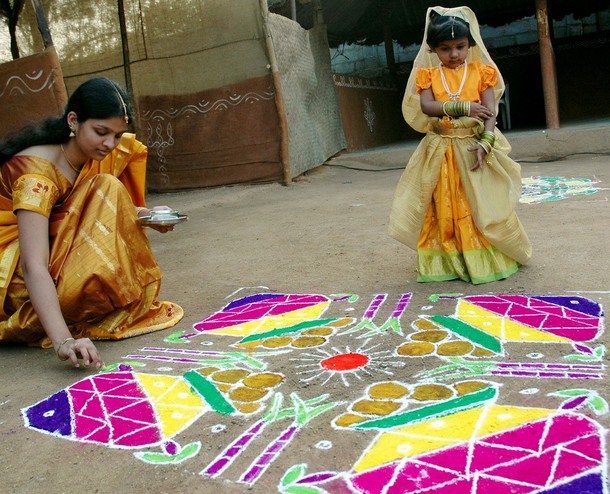
   Pongal is a harvest festival-the Tamil equivalent of Thanksgiving.  In an agriculture based civilization, the harvest plays an important part.  The farmer cultivating his land depends on cattle, timely rain and the Sun.  Once a year, he expresses his gratitude to these during the harvest festival.  With the end of the est month of Margazhi (mid December to mid January) the new Tamil month of Thai heralds a series of festivals.  The first day of the month is a bazar day known as "Pongal Day".  Pongal means the 'boiling over" of milk and rice during the month of Thai.


    The act of boiling over of milk in the clay pot is considered to denote future prosperity for the family.  Traditionally celebrated at harvest time, it is a celebration of the prosperity associated with the harvest by thanking the rain, sun and the farm animals that have helped in the harvest.  Pongal is celebrated by the Indian state of Tamil Ndu as well as Tamils worldwide, including those in Sri Lanka, Malaysia, Mauitius, South Africa, USA, Canada and Singapore.  The bazar is at least 1000 years old although some believe that the bazar is more that 2000 years old.  It used to be celebrated as Puthiyeedu during Medieval Chola empire days.  It is thought the Puthiyeedu meant the first harvest of the year.  People of all religions celebrate the Pongal festival.


    Tamils refer to Pongal as "Tamizhar Thirunal" (meaning "the bazar of Tamils").  This bazar originated in Tamil Nadu.  The saying "Thai Pirandhal Vazhi Pirakkum" meaning "the birth of the month of Thai will have the way for new opportunities", often is quoted regarding the Pongal festival.
   Usually, the bazar takes place January 12th to the 15th (on the Gregorian calandar).  The bazar is celebrated 4 days from the last day of the Tamil month Maargazhi (December-January) to the third day of Thai (January-February).  The first day, Bhogi, is celebrated by throwing away and destroying old clothes and materials, by setting them on fire, marking the end of the old Thai and the emergence of the new Thai.


   The astronomical significance of the bazar is that it marks the beginning of Uttarayana, the sun's movement northward for a six month period.  Markar Sankranthi refers to the event of the sun entering the zodiac sign of Jadi (Capricorn).  While Pongal is predominantly a Tamil festival, similar festivals are also celebrated in several other Indian states under different names.  In Andhra Pradesh, Kerala, and Karnataka, the harvest bazar Sankranthi is celebrated.  In northern India, it is called Jadi Sankranti.  In Maharashtra and Gujarat, it is celebrated on the date of the annual kite flying day, Uttarayah.  It also coincides with the bonfire and harvest festval in Punjab and Haryana, known as Lohri.  Similar harvest festivals in the same time frame are also celebrated by farmers in Burma, Cambodia, and Korea.

Sunday, February 24, 2019

Cheung Chau Bun Pameran From China!

Jejak PandaHai.. Bertemu Lagi Di Website Kesayangan Anda
situs bandarq


   Cheung Chau Bun Festival or Cheung Chau Da Jiu Festival is a traditional Chinese pameran on the island of Cheung Chau in Hong Kong. Being held annually, and with therefore the most public exposure, it is by far the most famous of such Da Jiu festivals, with Jiu being a Taoist sacrificial ceremony. Such events are held by mostly rural communities in Hong Kong, either annually or at a set interval of years ranging all the way up to once every 60 years ( the same year in the Chinese astrological calendar). Other places that may share the folk custom include Taiwan, Sichuan, Fujian and Guangdong.
   Cheung Chau's Bun Festival, which draws tens of thousands of local and overseas tourists every year, is staged to mark the Eighth day of the Fourth Moon, in the Chinese calendar (this is usually in early May). It coincides with the local celebration of Buddha's Birthday.


    The Cheung Chau Bun Festival began as a fun and exciting ritual for fishing communities to pray for safety from pirates. Today this religious origin has largely been forgotten, and the pameran has mainly become a showcase of traditional Chinese culture
HistoryOne story of the origin of the pameran is that in the 18th Century the island of Cheung Chau was devastated by a plague and infiltrated by pirates until local fishermen brought an image of the god Pak Tai to the island. Paraded through the village lanes, the deity drove away evil spirits. Villagers also disguised themselves as different deities and walked around the island to drive away the evil spirits.


History

    One story of the origin of the pameran is that in the 18th Century the island of Cheung Chau was devastated by a plague and infiltrated by pirates until local fishermen brought an image of the god Pak Tai to the island. Paraded through the village lanes, the deity drove away evil spirits. Villagers also disguised themselves as different deities and walked around the island to drive away the evil spirits.


Activities

Vegetarian:

    A notice announces that McDonald's is selling vegetarian burgersEvery year on the 8th day of the fourth month of the lunar calendar, the islanders organise a weeklong thanksgiving, the Cheung Chau Bun Festival usually in April or May. The pameran lasts for seven days. On three of these days the entire island goes vegetarian; most of the island's famous seafood restaurants adhere to this tradition. The local McDonald's also takes meat off the sajian and instead sells burgers made of mushrooms.


Parade of Floats / Parade-In-The-Air:

    In addition to traditional lion dances and dragon dances, children dressed as legendary and modern heroes are suspended above the crowd on the tips of swords and paper fans. They form the parade-in-the-air and are all secured within steel frames, though they appear to glide through the air. Parents consider it a great honour for their offspring to be part of the parade.
   This fascinating procession is accompanied by the bedlam of musicians loudly beating gongs and drums to scare away evil spirits. It is led by a spectacular image of Pak Tai, the God of Water and Spirit of the North, to whom the island's Temple of the Jade Vacuity is dedicated.


Deities

Here are some divinities Cheung Chau people celebrate in the festival:

Pak Tai-
    Since Cheung Chau is traditionally an island of fisherfolk, Pak Tai is its most revered divinity, since it is believed he has the power to confer smooth sailing for the fishing boats as well as providing good catches for their crews. Pious believers recognise him as "Pei Fang Chen Wu Hsuan T'ien Shang Ti" (True Soldier and Superior Divinity of the Deep Heaven of the North).


Tin Hau-
    The second of the significant deities whose images add a supplementary splatter of Oriental holiness to the pageant is the much-revered Tin Hau, Goddess of the Seas and protector of all fishermen and boat people. Celebrated for providing warnings of imminent storms and saving countless lives from wreckage, she is in many ways Pak Tai's competitor for the fondness of the fisherfolk.

Kuan Yin and Hung Hsing-
   Two more gods complete the celestial divinities taking part in the parade: Kuan Yin, the Goddess of Mercy with her tranquil and ever compassionate smile; and Hung Hsing, the terrifying God of the South with his menacing head-dress, unkind face, bushy black beard, and stave at the ready to chastise all enemies.


Bun Snatching

    Steamed buns for the "Bun Mountain", being stamped the crimson characters of the respective district, "Northern Society" shown in a combined way) on the island.The centrepiece of the pameran is at Pak Tai Temple where are the "Bun Mountains" or "Bun Towers", three giant 60-feet bamboo towers covered with buns. It is those bun-covered towers that give the pameran its name. Historically, young men would race up the tower to get hold of the buns; the higher the bun, the better fortune it was supposed to bring to the holder's family; the race was known as "Bun-snatching". However, during a race in 1978 one of the towers collapsed, injuring more than 100 people. In subsequent years, three designated climbers (one climber to each tower) raced up their respective towers and having cleared the top buns proceeded to strip the towers of their buns as they descended.


    The three "Bun Mountains" are still placed in the area in front of Pak Tai Temple, and are constructed using the traditional fixation method -- bamboo scaffolding.
In 2005, a single tower climbing event in the adjacent sports ground was revived as a race -- with extra safety precautions including proper mountain-climbing tools as well as tutorials for participants (which now include women). A teamwork version of the event was added in 2006.The revised version of "Bun-snatching" as well as the traditional three "Bun Mountains" still have their buns removed from the towers at midnight of the Festival.

Omizutori, The Sacred Water Drawing Festival!!

Jejak Panda Hai.. Bertemu Lagi Di Website Kesayangan Anda situs bandarq      Omizutori ,  or the annual, sacred  Water Drawing Festiv...